Rooms in which
blasting is done.
Blast room, open blast facility, blast cleaning house, blast hall — the terms all mean the same principle, available in different sizes — an enclosed area in which blasting is done by hand, with recovery in the floor and its own dust extraction.
The hall is
part of the system.
-
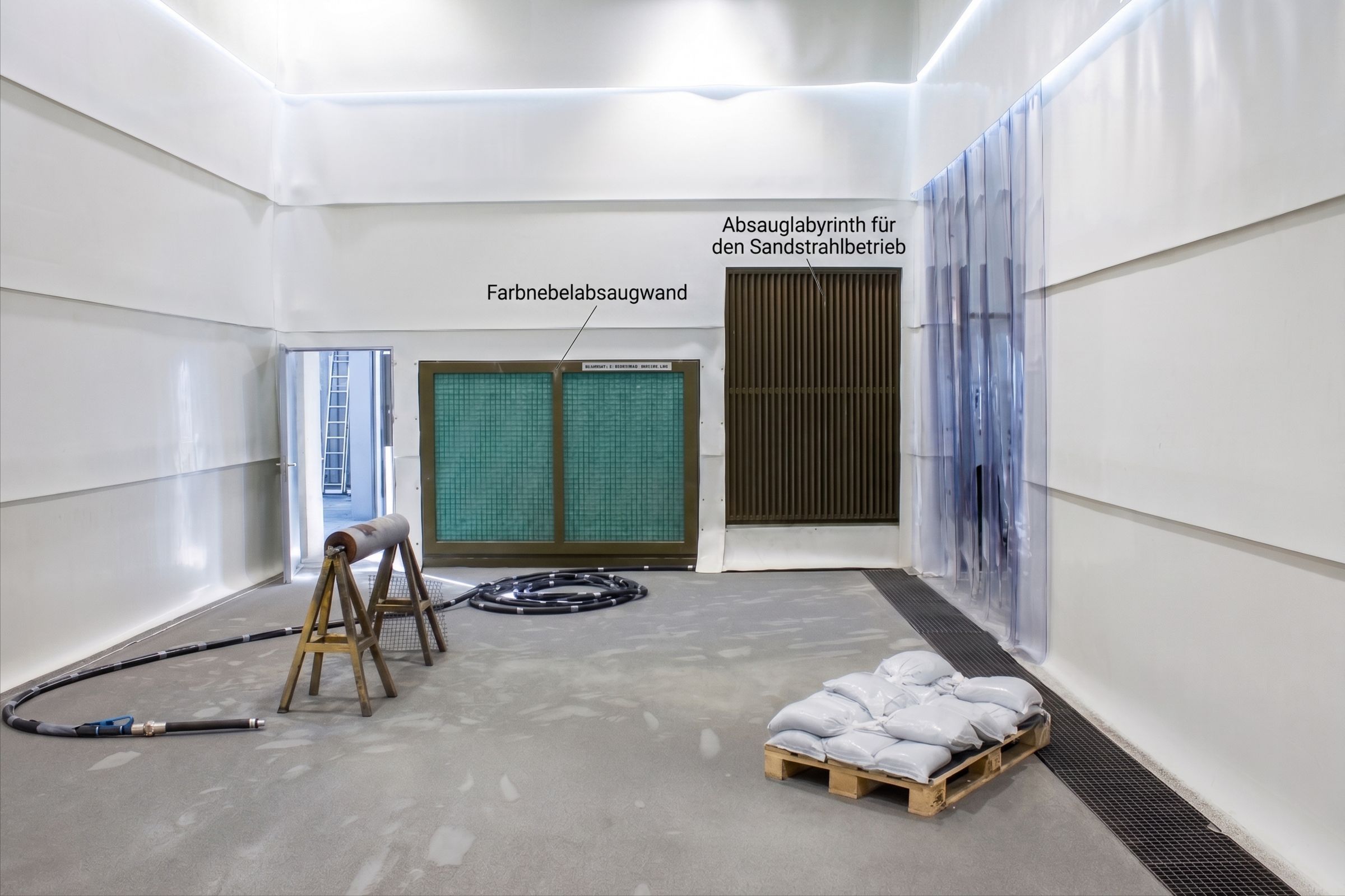
Enclosure
Cabin, room or a whole hall
The size follows the largest component that has to go in — including the crane hook, the turning device and the room the operator needs to work. We plan the space around the component, not the other way round.
- Wall construction with wear protection on the blasted faces
- Separate doors for components and personnel
- Dust-tight lighting
-
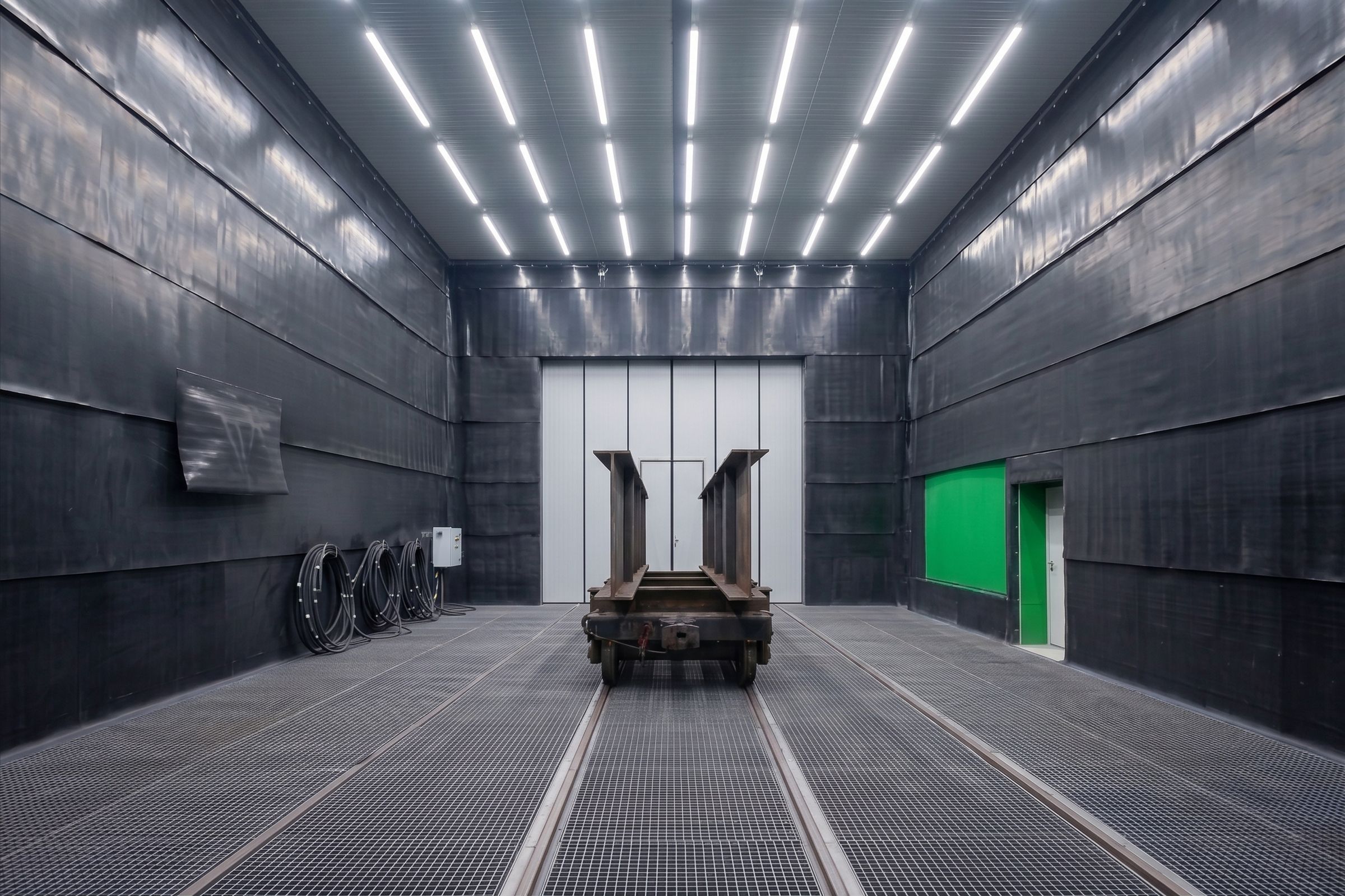
Recovery
The floor brings the grain back
The recovery system sits under the working floor — the blast media falls through gratings, is collected, separated from dust and broken grain, and goes back to the pot. Without that loop a blast room would not be affordable to run.
- Scraper floor, screw conveyor or pneumatic conveying
- Air classifier to separate dust and broken grain
- Sized to the blast media and the throughput
-
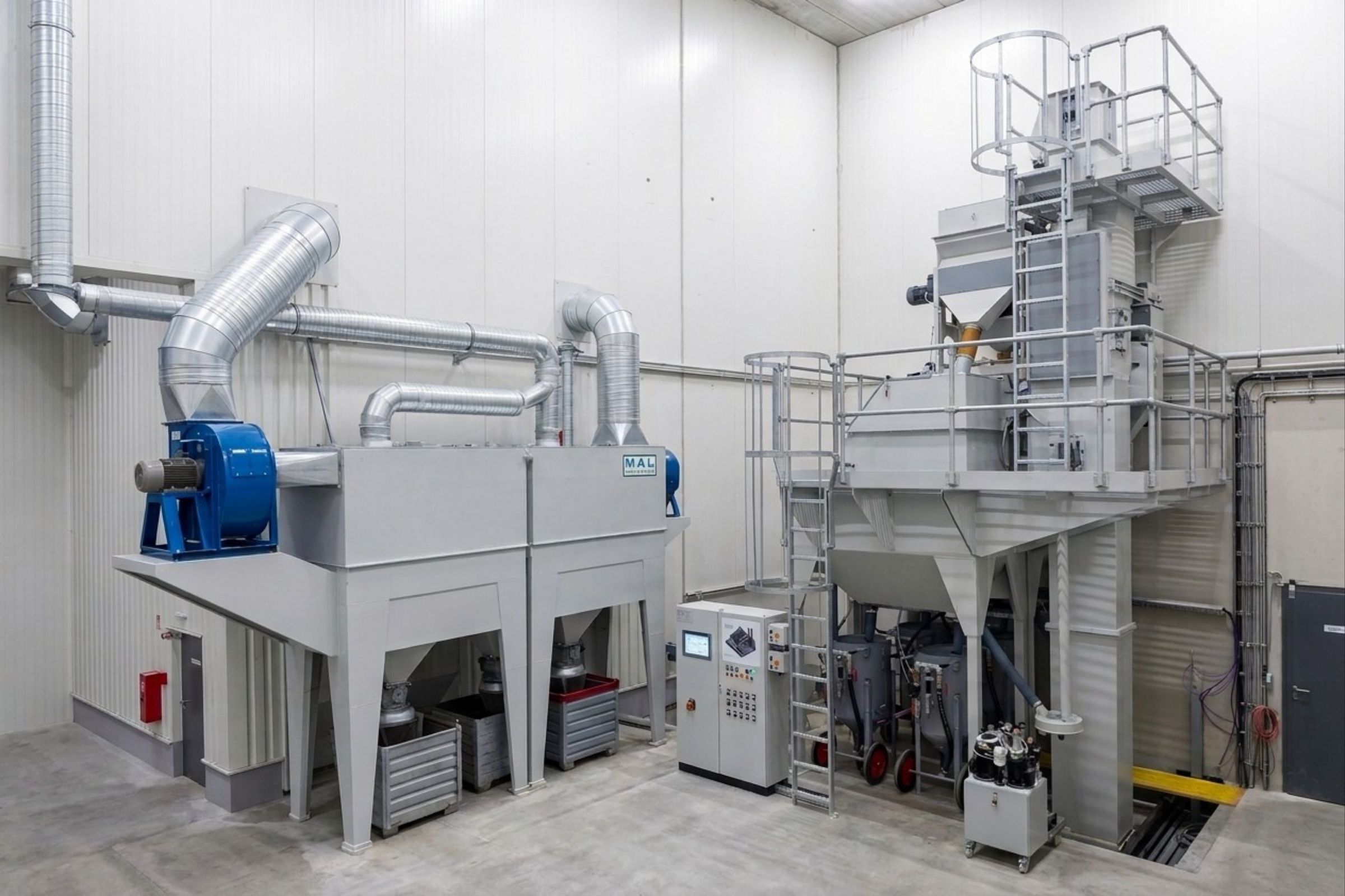
Air management
Visibility and breathing air
Extraction decides whether the operator can see anything. It guides the air so the dust is drawn away from the working area — and it keeps the room slightly under negative pressure so nothing escapes.
- Capture at the point where the dust is created
- Filter unit cleaned down during operation
- Separation up to dust class H
- Can be configured for hazardous substances
Preparation grade and roughness
What counts in the end is the surface — the required preparation grade and a roughness profile the coating will hold on to. Both depend on the blast media, the pressure and the operator's technique — and on the system delivering those values repeatably.
- Preparation grades to ISO 8501-1
- Roughness as specified by the coating system
Planning a blast room?
Tell us the largest component that has to go in and the surface you need — the rest follows from that.