Dust extraction,
mobile and stationary.
Without extraction, blasting is neither reasonable nor permitted. We build the system that carries the dust away where it is created — on site as well as in production.
Where the system stands
decides its design.
-
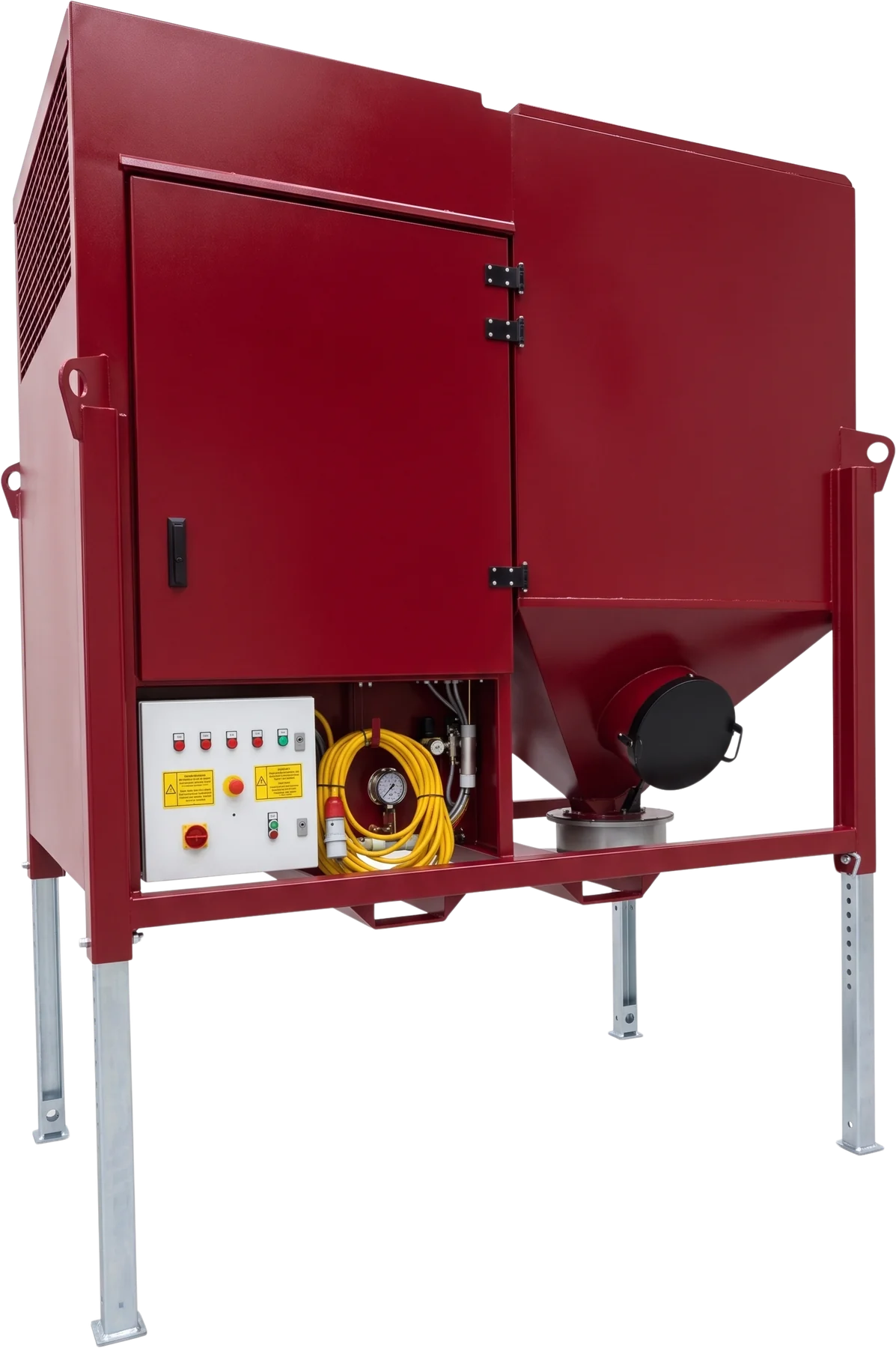
Mobile
Site dust extraction
Mobile filter units for use on location. They hold the enclosed area under negative pressure, extract the dust and separate it through continuously cleaned filters.
- In several sizes
- Sized to the enclosed volume, the required air volume flow and the air change rate
- Can be configured for hazardous substances — asbestos, lead, PCB, PAH
-
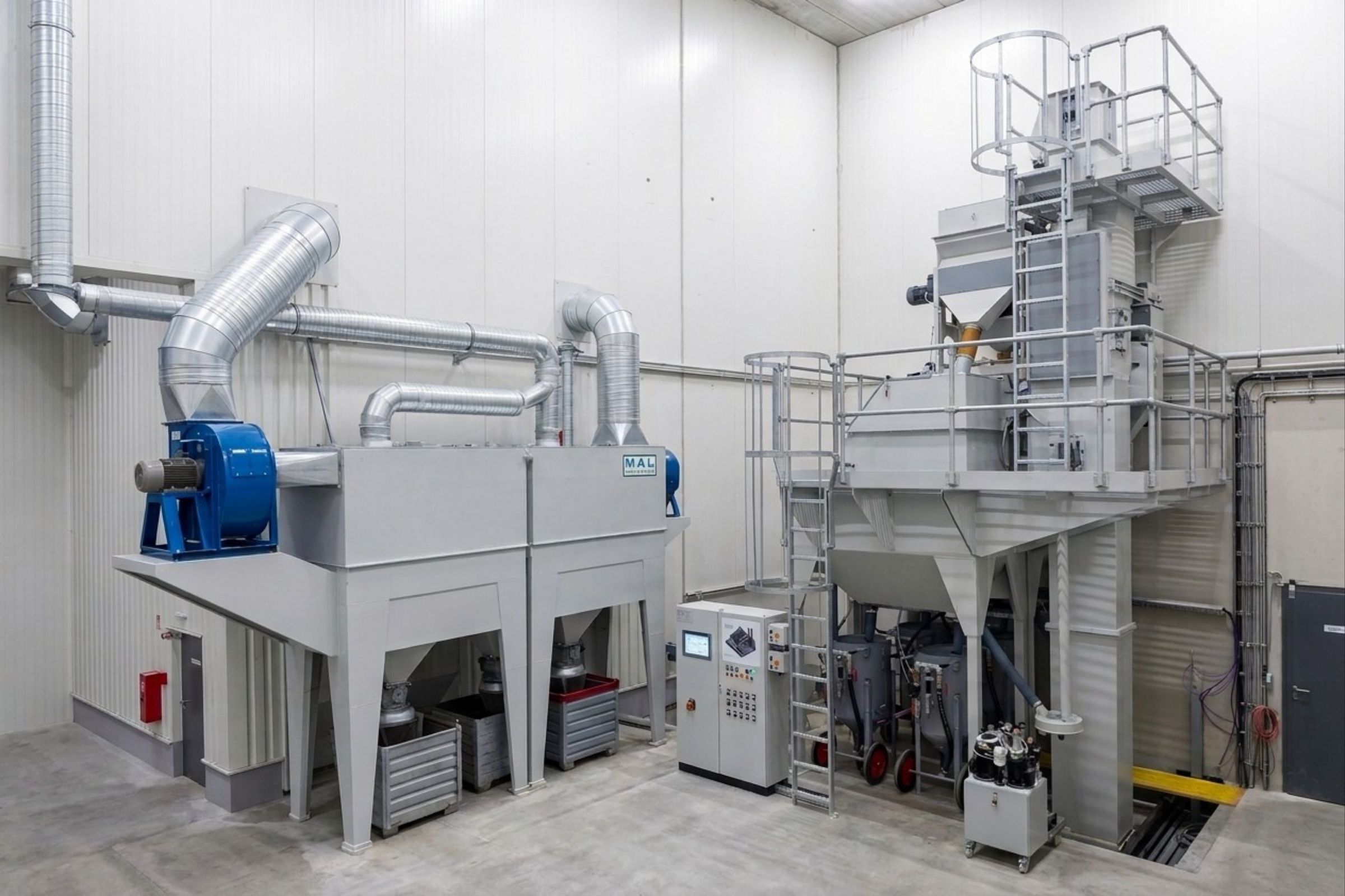
Stationary
Dust extraction in production
Permanently installed systems for blast rooms, wheel blast machines and machining stations. They are planned together with the building — ducting, capture elements and filter capacity follow from actual operation, not from a catalogue.
- Filter unit cleaned down during operation
- Dust discharge into drum, big bag or container
- Exhaust air routed indoors or outside
- Separation up to dust class H to EN 60335-2-69
-
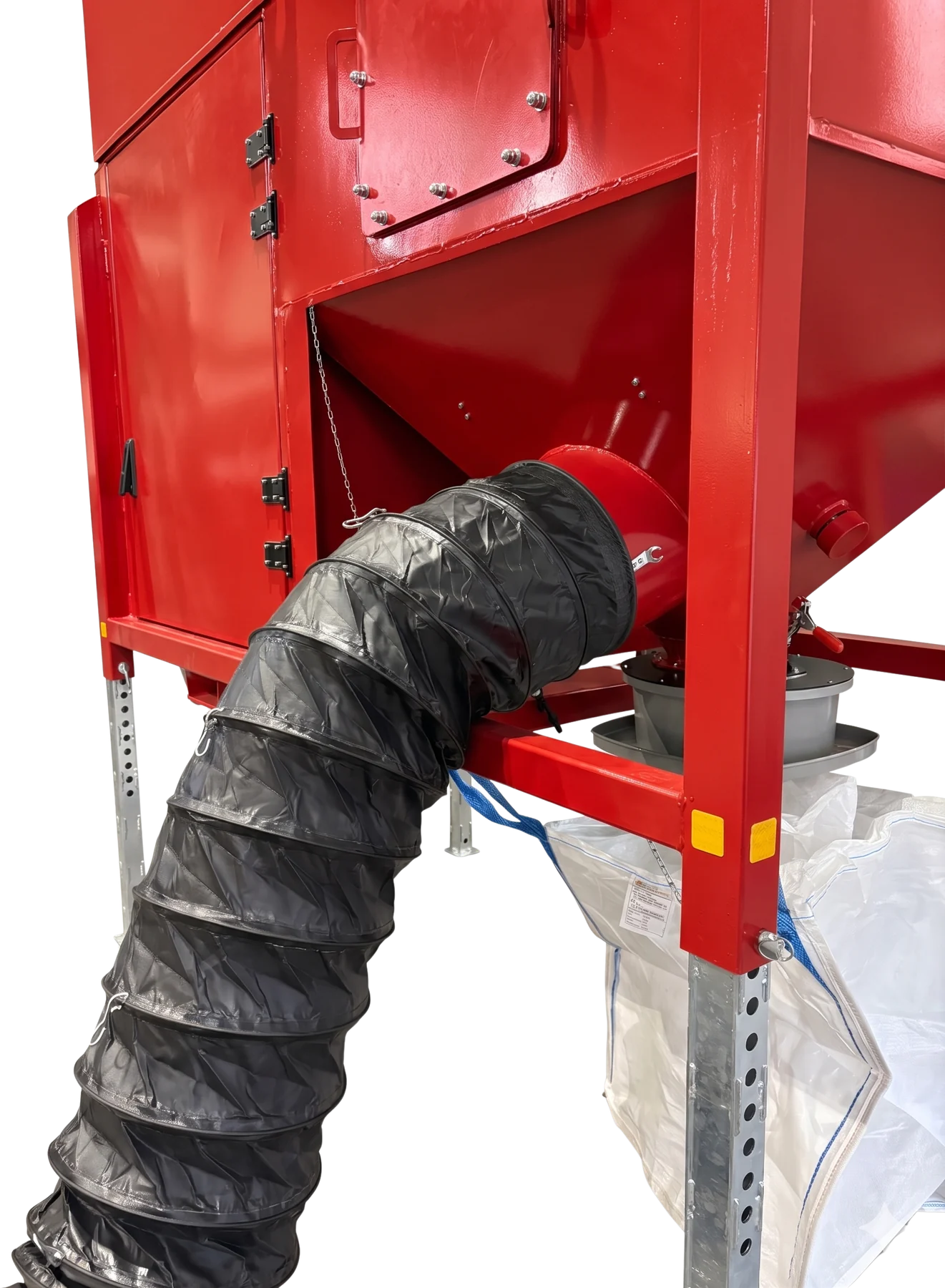
Discharge
Where the dust goes
The separated dust has to leave the system in a controlled way — with hazardous substances, dust-tight and without anyone decanting it in the open. The discharge is therefore sized with the same care as the filter itself.
- Drum discharge with a connection under the hopper
- Big bag station for larger quantities
- Dust-tight design for dust containing hazardous substances
Asbestos, lead,
PCB, PAH.
When removing coatings that contain hazardous substances, success is decided not by the blasting but by the air management. Every one of our systems — mobile as well as stationary — can be configured for it.
The enclosure is held under negative pressure. Air flows in under control and leaves the area only through the filter.
That keeps the hazardous substance inside the system even if the enclosure has a leak — the direction of flow always points inwards. That is the difference between an extraction unit and a system you are allowed to remove asbestos with.
-
Asbestos
Sprayed asbestos, asbestos cement, asbestos-containing coatings. The system is configured to the requirements for demolition work involving asbestos.
-
Lead
Red lead and lead-bearing old paint of the kind found on bridges, masts and hydraulic steel structures from several decades back.
-
PCB
Polychlorinated biphenyls from joint sealants, paints and coatings of the construction period between the nineteen-fifties and nineteen-eighties.
-
PAH
Polycyclic aromatic hydrocarbons, for example from tar and bitumen coatings on tanks and pipework.
Which protective measures apply in an individual case is determined by the competent authority and the survey of the structure. We build the system that meets those requirements — the assessment itself is not our task.
Have the air volume sized
Tell us the dimensions of the enclosure or hall — we will calculate the extraction capacity needed.